
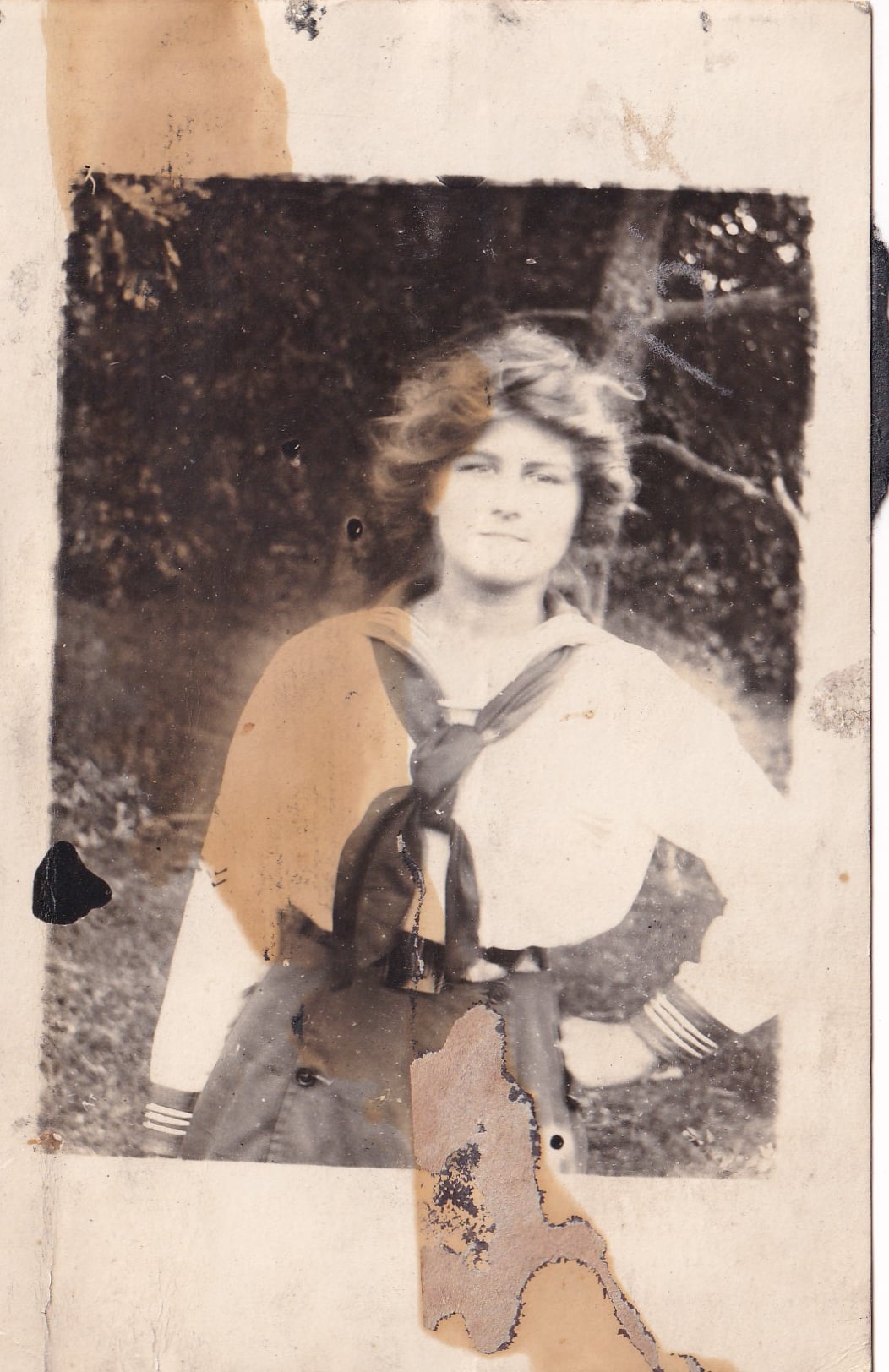
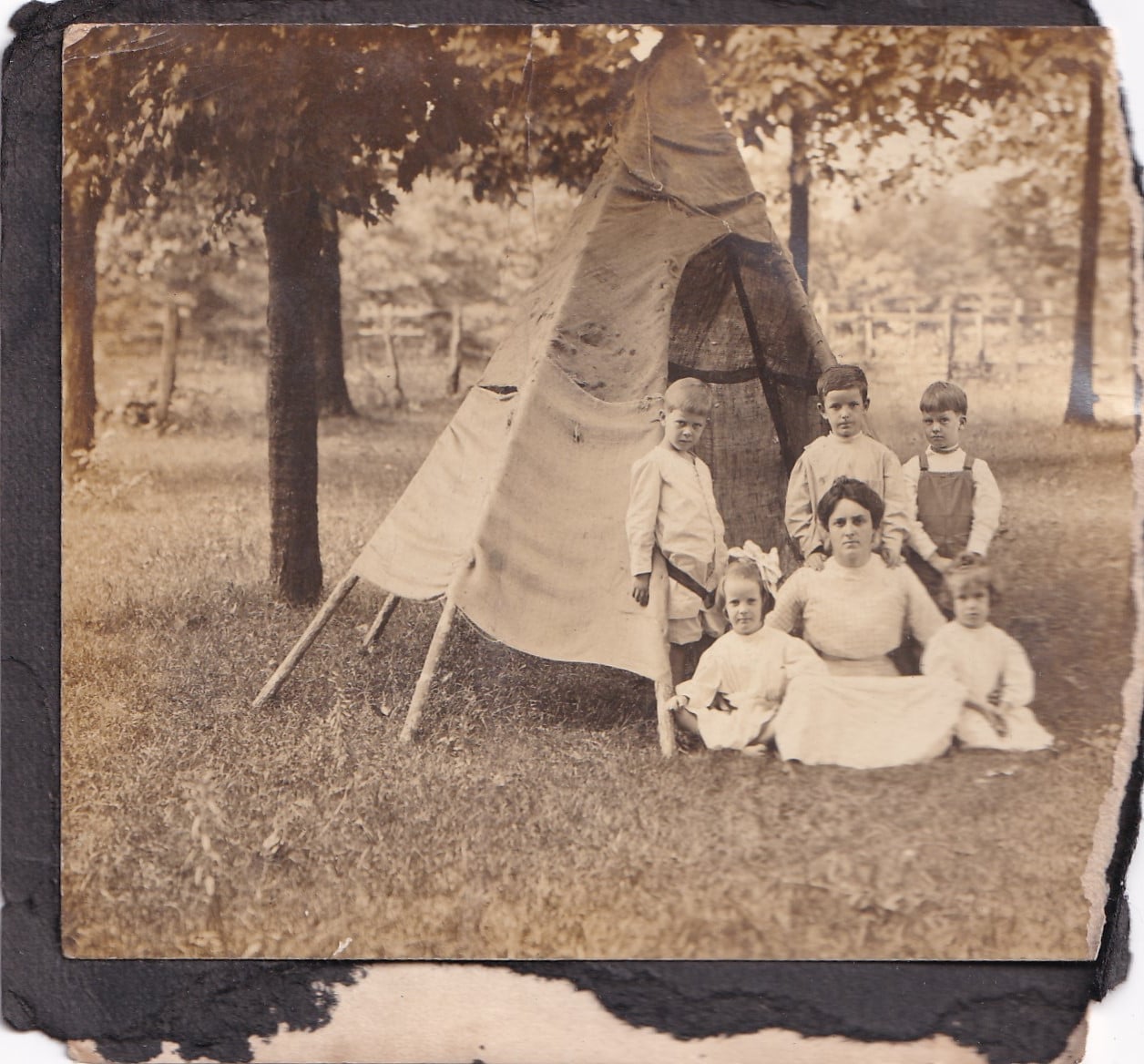
This is my favorite photo in Pop’s stash of family pix in the black metal box. We’ve seen Mom’s “fire and brimstone,” but my sisters and nieces are one notch above. Doh! Got an equal portion from Pop’s side of the family tree.
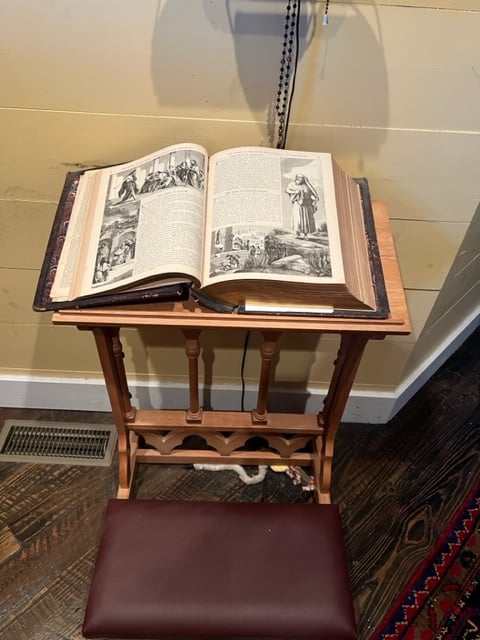
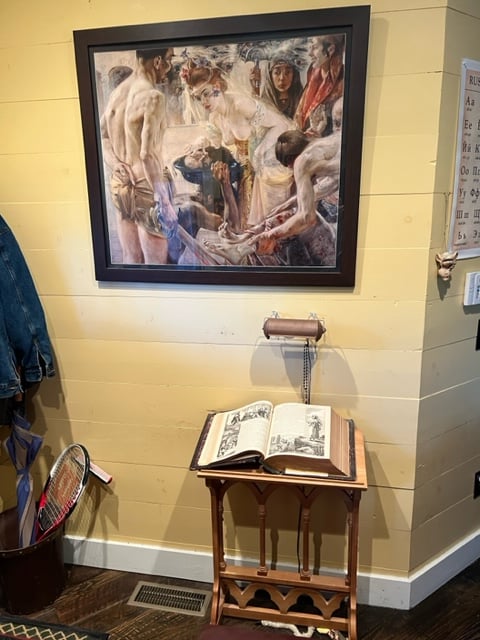
When Mom died, somehow I ended up with the 1860’s Family Bible. It’s a beautiful book, VERY large, with gold-edged pages and very nice illustrations. Here it is in the foyer of my house. In the image below, that’s a famous painting of Salome and the head of St. John the Baptist (always liked that guy – Jesus is a bit too powerful for the likes of me) above the prayer bench. Ahh – what a lovely last sight before you breathe your last.
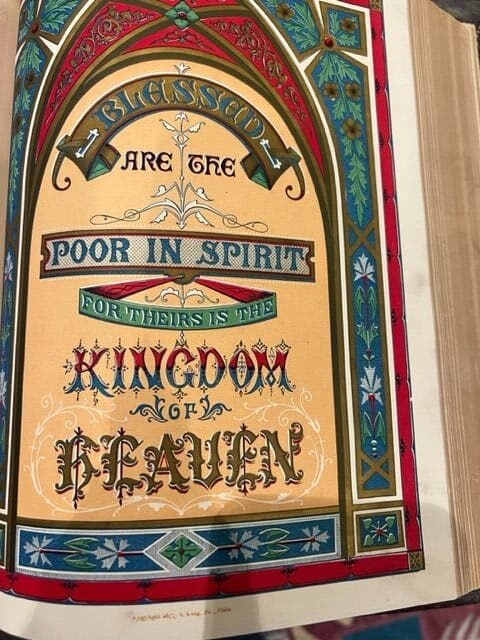
I was going through the Bible just now to take some photos of the genealogy pages and found this full-color page for the first time. That’s me, the quintessential “Poor in Spirit.”
Here are the genealogy docs.
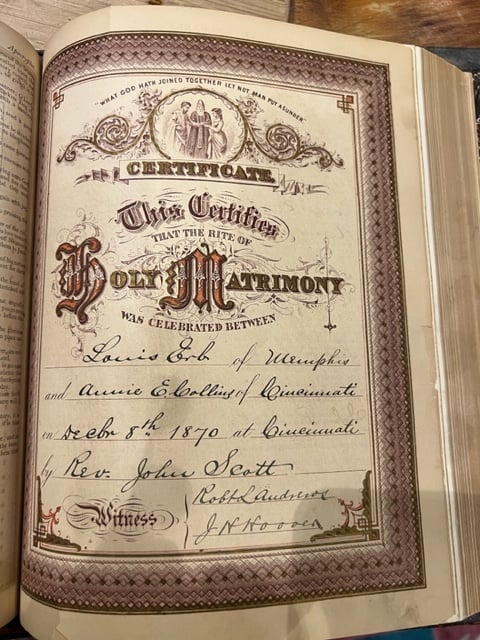
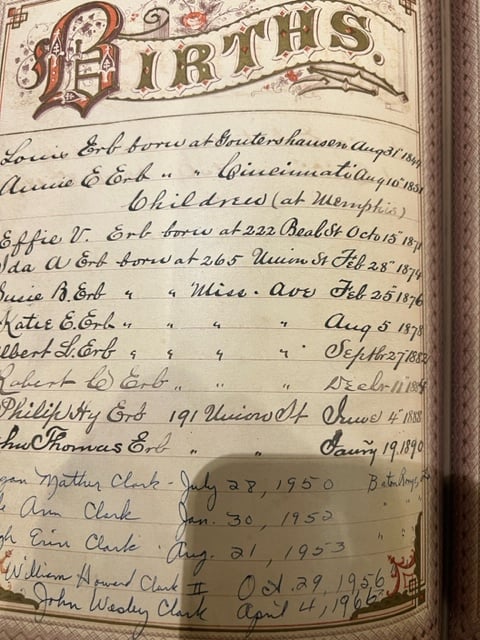
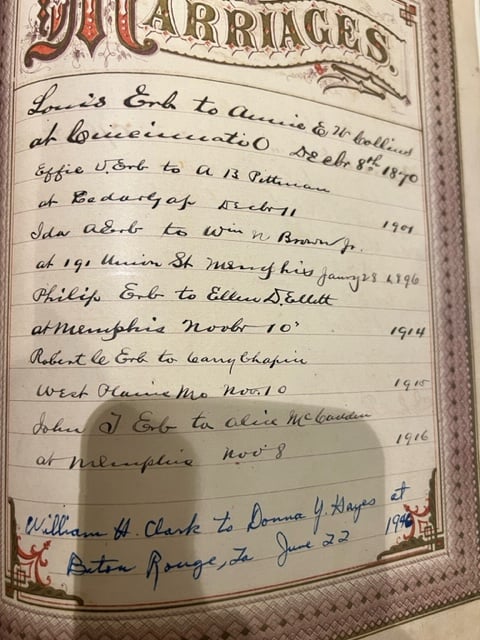
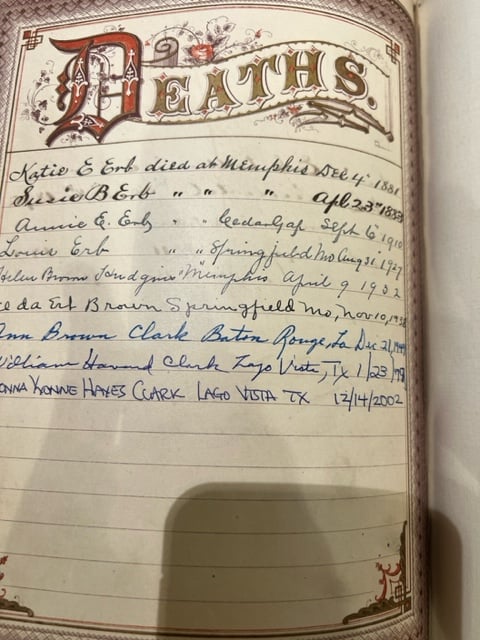
Notice that Anne Brown, Pop’s mother died a few days before Christmas. It’s my understanding she committed suicide. She was Catholic (like that whole side of the family). Pop was never keen on religion. . . . Anne Brown’s father William N. Brown was mentioned in a Time magazine story. He was a leading citizen in Memphis after the Civil War where he helped rid the city of yellow fever after a devastating outbreak.
Mom’s father was Ralph Hayes, Dean of Forestry at LSU (also the Founder). Here’s a bio from this publication. Another small booklet describes forestry was like back then. Dadee – as we called him – spent his early career on Indian Reservations out west. I’m thinking one of the boys is Daddee – the one with the surly-est expression.
Anyway, I keyed on the 1904 marriage of Ida Erb to William N. Brown. After I left Austin, I bought a house at 206 China Street in Port Gibson, Mississippi. It’s not far from Vicksburg, the famous Civil War battleground city. I sold the place a year later. As I was walking around the neighborhood, waiting for closing, I chanced upon Wintergreen Cemetery.
Lo and Behold, why – there as William N. Brown’s grave next to Ida Erb and a tiny grave for “Little Bill.” Turns out, William N. Brown was a Colonel in the Civil War, head of the 20th Mississippi Regiment. Here’s the official muster for that Regiment. Looks like he done good after the war – that Time Magazine story was about his life-saving efforts in Memphis later on.
Dr. Louis Erb, founder of the Erb dynasty in America, was a famous Swiss doctor (that reflex when you hit that spot on your knee is named after him). Four Erb sons emigrated, settling in Pennsylvania where they founded the Mennonite community there. Seigfried Erb enlisted with the 1st Arkansas Rifles, one of the first units formed. Solomon Erb joined the Bluecoat Army.
This later evolved into the main plot of my screenplay Deo Vindici, “God Will Vindicate,” now called Shiloh.
Hundreds more photos going all the way back to the late 1800s in Pop’s black metal box (sitting on my kitchen counter . . .)
